Multiple serial & network ports (includes DB9/RS232 and Ethernet)
Dependent on deployment, typically up to 100m Ethernet
Industrial automation, data acquisition, remote equipment management
Yes
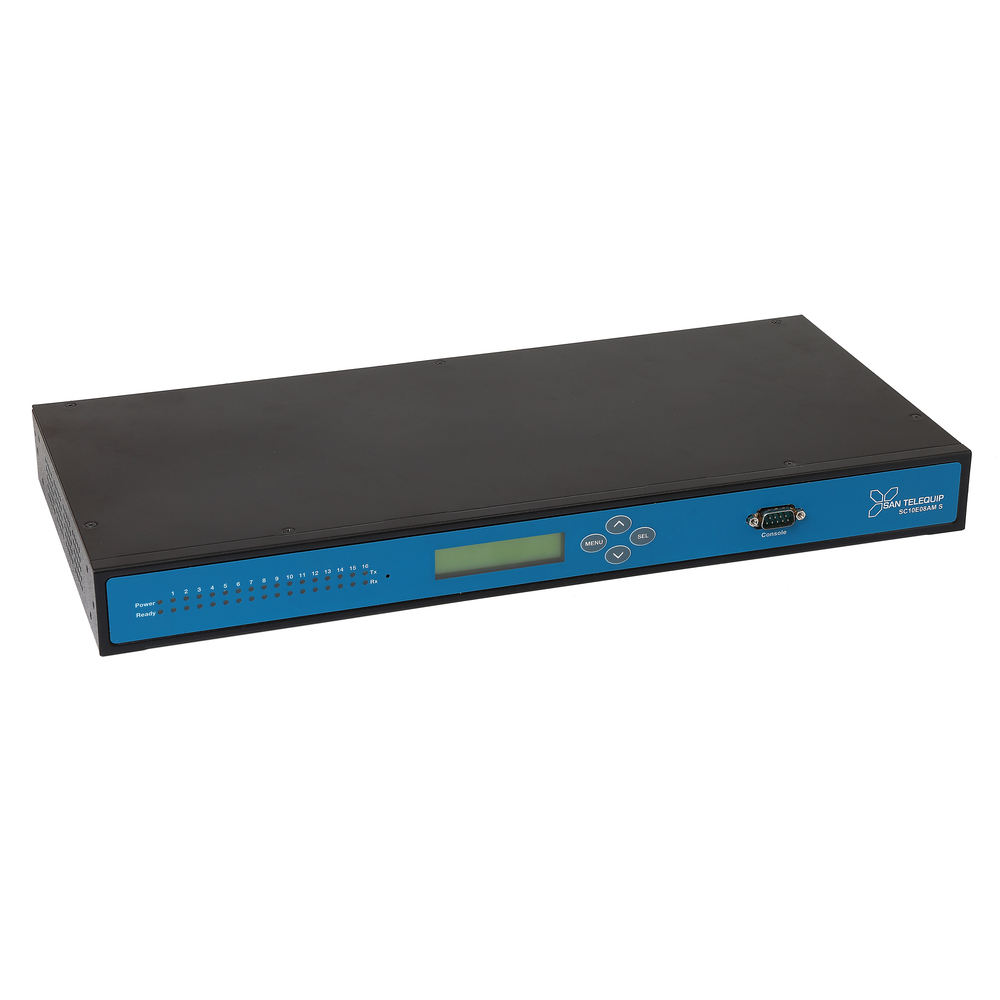
19" Rack-mountable (1U)
LED for Power/Ready & Port Status
5% to 95% RH (non-condensing)
Alphanumeric LCD (front panel)
CE, FCC, RoHS
Web-based GUI, Serial Console, Telnet
Metal housing (EMI shielded)
300 bps to 921.6 kbps (serial)
Electrostatic Discharge (ESD) protection for serial ports
Supported via network/serial
Password protection, secure management
idustrial turminal server Trade Information
12 Days
Product Description
An industrial terminal server is
a specialized networking device that connects serial-based industrial equipment (PLCs, sensors, drives) to an Ethernet network, allowing for centralized remote monitoring, management, and data acquisition. They act as a bridge between older, asynchronous serial devices and modern IP networks, typically employing high-level security features like encryption and authentication to ensure secure communication, often referred to as console servers when used for managing other IT assets.
Key Aspects of Industrial Terminal Servers:
Serial-to-Ethernet Conversion: These devices convert serial data (RS-232/422/485) from industrial equipment into TCP/IP Ethernet packets.
Remote Access: Enables engineers and operators to access console ports on machinery from a network operations center (NOC) or remotely over the Internet.
Security Features: To combat security risks, they often include advanced features like authentication, data encryption, and sometimes hardware security components.
Industrial Hardening: Unlike typical IT servers, these devices are built for rugged environments, featuring robust casings, wide temperature tolerances, and DIN-rail mounting options.
Key Applications: Used for remote monitoring of PLCs, management of remote telemetry units (RTUs), connecting point-of-sale (POS) terminals, and accessing console ports on network devices
Industrial Grade Reliability and Protection
Built with a shielded metal enclosure and equipped with ESD protection on all serial ports, this terminal server ensures reliable and uninterrupted data transmission, even in electrically noisy industrial environments. Compliance with CE, FCC, and RoHS regulations further underlines its suitability for professional applications, while an operating temperature of 0C to 50C makes it ideal for diverse deployment conditions.
Versatile Remote Management and Secure Configuration
Manage your terminal server remotely and securely through a web-based GUI, serial console, or Telnet connection. The device supports password protection and secure management protocols, providing peace of mind for critical operations. Firmware can be easily upgraded via network or serial connections, minimizing downtime and maintaining top performance.
Flexible Connectivity for Industrial Applications
Support up to 16 RS232 serial devices and seamless Ethernet integration with this 1U rack-mountable terminal server. The LCD control panel and LED indicators on the front panel provide intuitive local management, while its network routing features and multiple interface options make it suitable for a wide range of applications, from automation to remote equipment management.
FAQ's of idustrial turminal server:
Q: How do I configure the industrial terminal server for my application?
A: Configuration can be performed using the built-in web-based GUI, serial console, or through a Telnet session. The LCD front control panel also allows for basic operations. Simply connect to the device over Ethernet or serial port, log in with your credentials, and use the intuitive menu system to set up network, port, and security parameters.
Q: What data rates are supported by the serial ports, and how do I select the necessary baud rate?
A: The terminal server supports baud rates ranging from 300 bps to 921.6 kbps for its RS232 serial ports. Baud rate is configurable per port via the web GUI, serial console, or Telnet, making it adaptable to a variety of connected industrial devices and data acquisition needs.
Q: When should I consider using this terminal server in my industrial network?
A: This server is ideal for centralizing serial communication in automation, data acquisition, and remote equipment management scenarios. Install it when you need to connect multiple legacy or modern serial devices to an IP network for monitoring, control, or integration into SCADA or enterprise systems.
Q: Where can the terminal server be installed, and what are the mounting options?
A: The server is specifically designed for standard 19-inch rack installation (1U height), making it suitable for industrial control rooms, data centers, or equipment racks commonly found in automation and monitoring setups.
Q: What protection features are included for reliable industrial operation?
A: The device offers ESD protection on serial ports, a fully-shielded EMI-resistant metal housing, and operates within a 5% to 95% (non-condensing) humidity range and 0C to 50C temperature span. These features ensure longevity and stability in harsh environments.
Q: How can I upgrade the device firmware, and what are the benefits?
A: Firmware updates can be completed over the network or via serial interface, using the management menu or application. Keeping firmware current enhances security, adds new features, and ensures optimal device performance.
Q: What are the main benefits of using this industrial terminal server for service providers or traders?
A: This server streamlines serial-to-Ethernet communications, enabling remote access, centralized management, and quick integration of legacy equipment. Its robust security, flexible configuration, and industrial-grade reliability offer substantial operational efficiency and reduced maintenance costs.
Tell us about your requirement
Price:
Quantity
Select Unit
50
100
200
250
500
1000+
Additional detail
Mobile number
Email
Name
Comapny Name
Phone Number
Email Id
City / State
Confirm Your Requirement
Verification Code
Did not receive yet?
Resend OTP
You’re Done!
We have received your requirements and will reply shortly with the best price.






 Send Inquiry